|
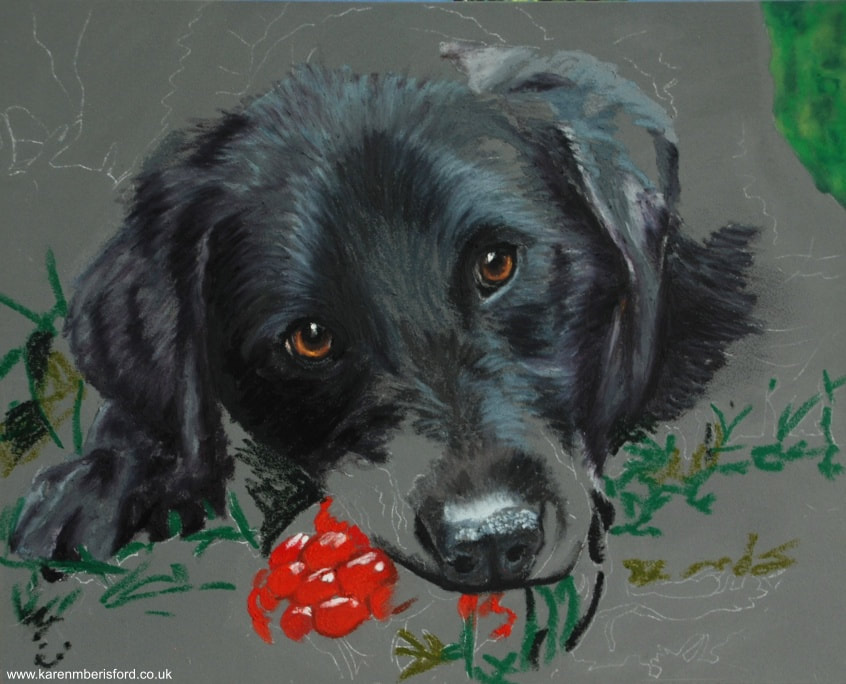
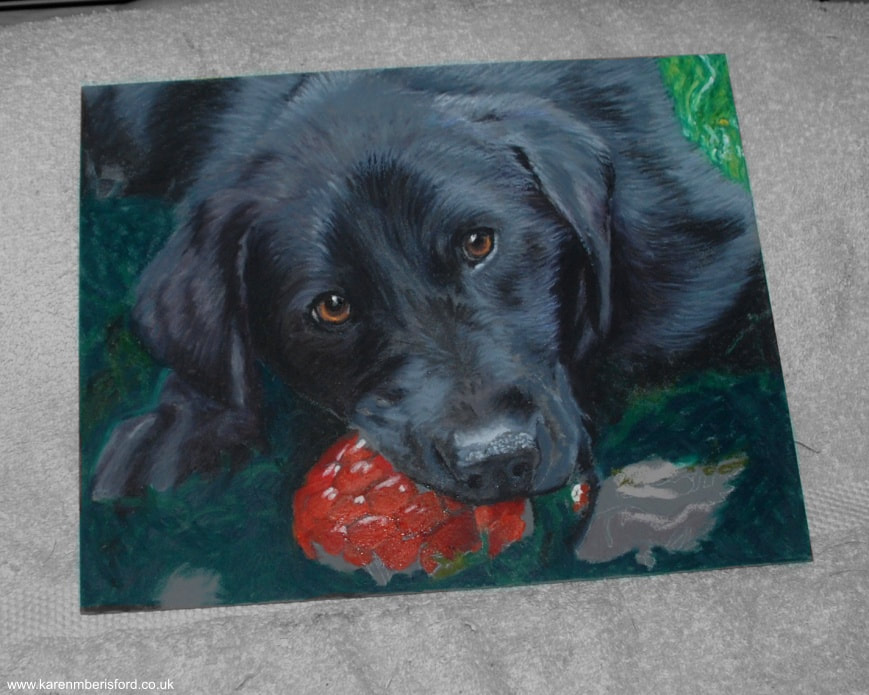
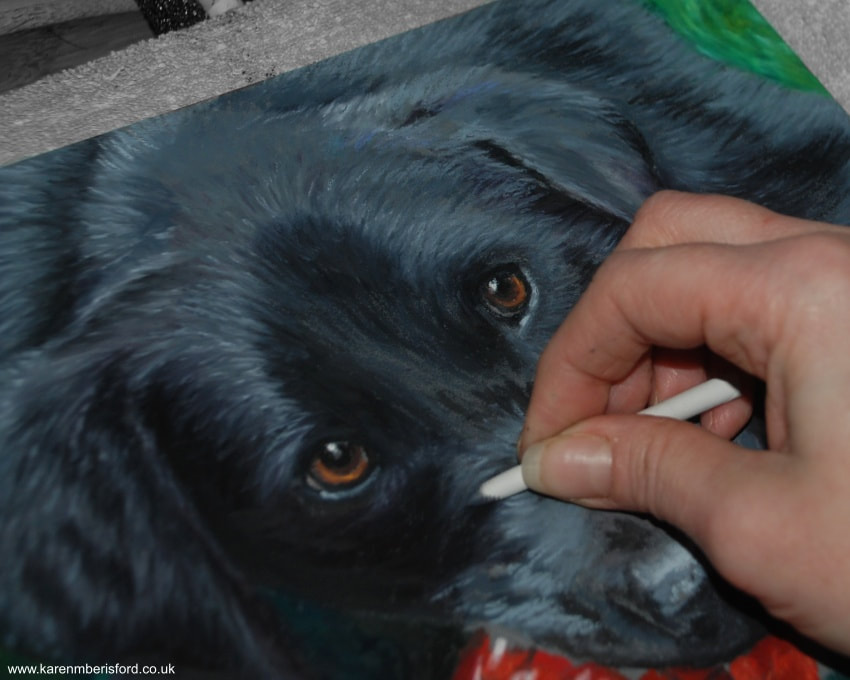
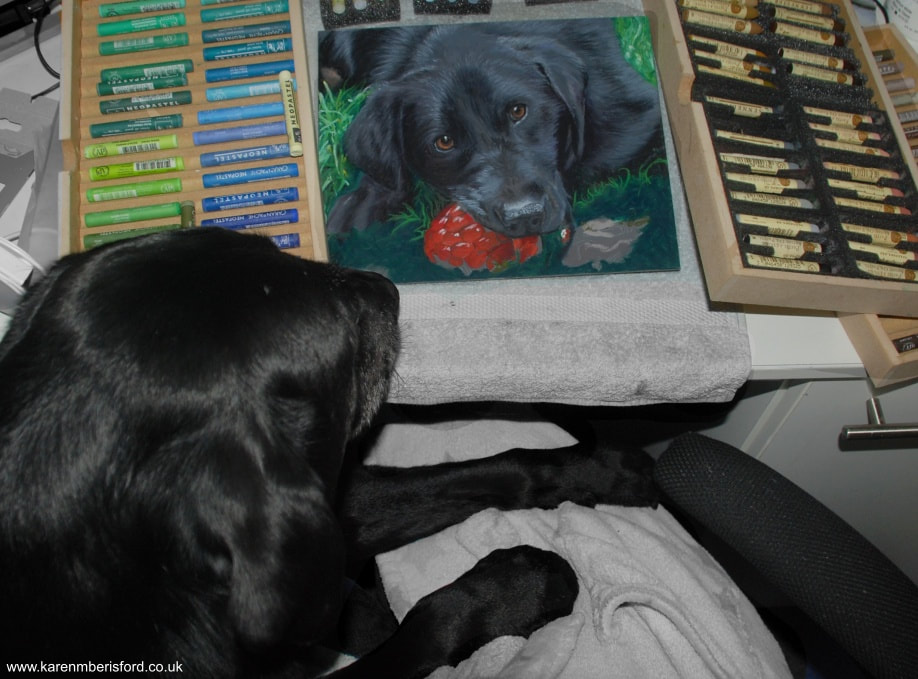
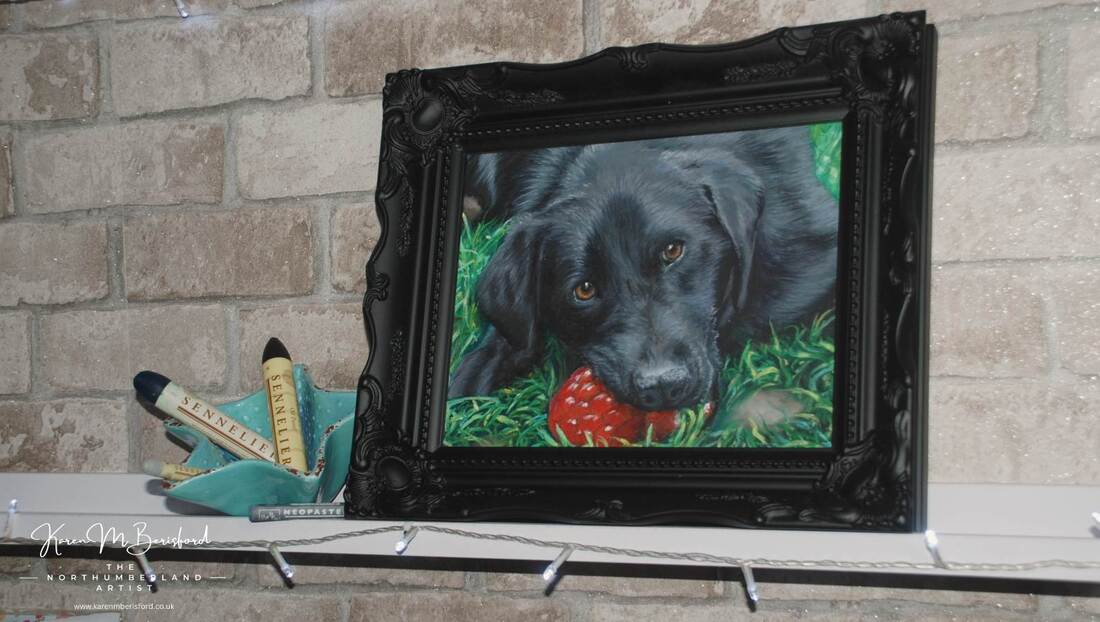
I enjoy using oil pastels to create portraits in addition to coloured pencils and acrylics, and I find it to be one of the most versatile mediums available. When it comes to creating beautiful and unique works of art, oil pastels offer an unmatched finish that can be applied to any subject with ease. One of my latest portraits is of our late black Labrador Haze. 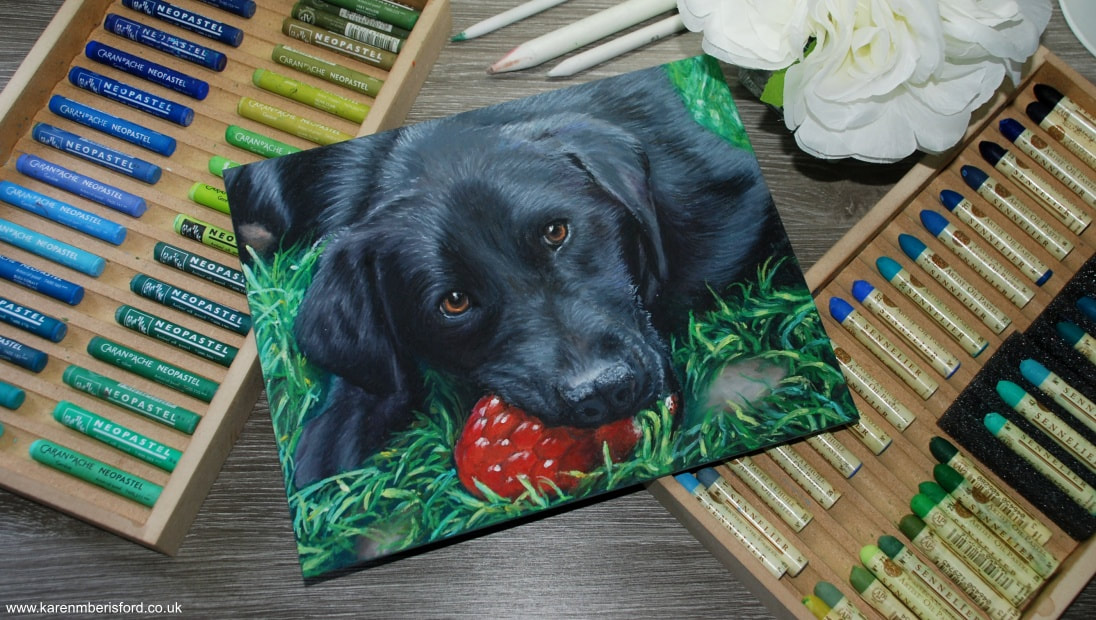 In loving memory of Haze - 03.05.23 When creating my oil pastel paintings, I use professional pastel brands such as Sennelier and Caran d'Ache. One of the most significant advantages of using Sennelier and other soft pastel brands is their superior coverage and pigmentation. These pastels offer a rich and vibrant color that makes each stroke stand out and come to life. On the other hand, harder pastels such as Neopastel enable me to produce fine lines, which is essential when creating intricate details and textures in my portraits.
When it comes time to store or frame my oil pastel portraits, I always take great care to ensure that they are protected. Since oil pastels never dry, it is highly recommended to store them in a secure location until they are framed. When framing, I highly recommend using glass to prevent debris such as hair and dust particles from damaging the painting's surface. Improper removal of debris can damage the painting's surface, but using glass can prevent this from happening.
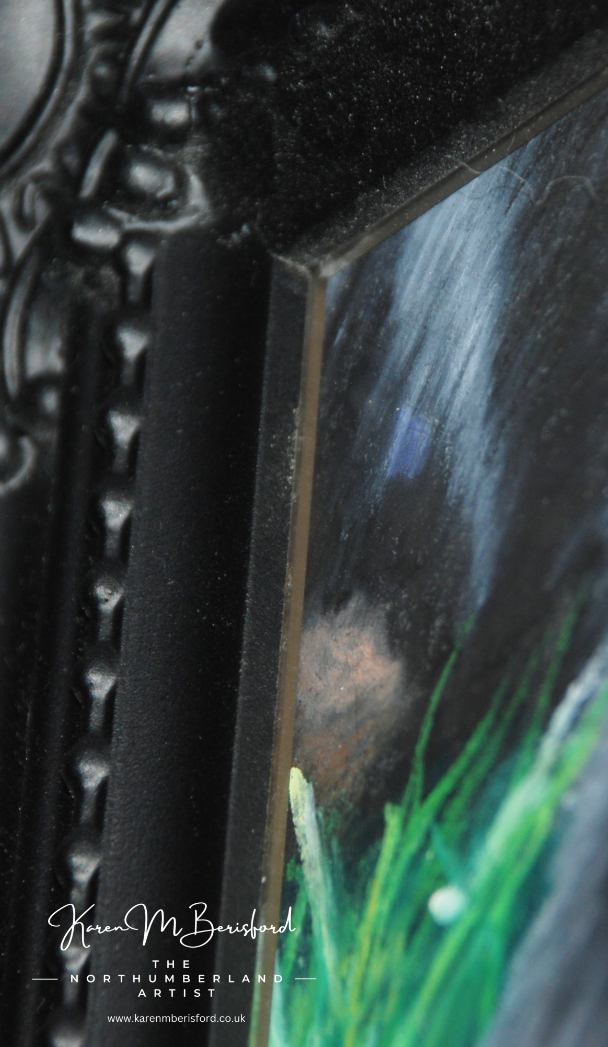
It is important that a spacer is present between the painting and glass. This is done to prevent them from touching and adhering to each other, which can cause irreversible damage to the artwork. The spacer is a thin strip that adheres to the glass surface, creating a gap between it and the glass. When viewed from a close distance and at an angle, the spacer can be seen, but it is designed to be discreet and does not detract from the artwork itself. The material used for this oil pastel painting is known as acrylic glass. This particular product boasts exceptional durability and a reduced risk of breakage.
Overall, oil pastels are an incredibly versatile and beautiful medium that can create stunning works of art. Should you wish to inquire about ordering an oil pastel portrait, please get in touch. Feel free to share this post via your social media or email someone who may find this article of interest.
0 Comments
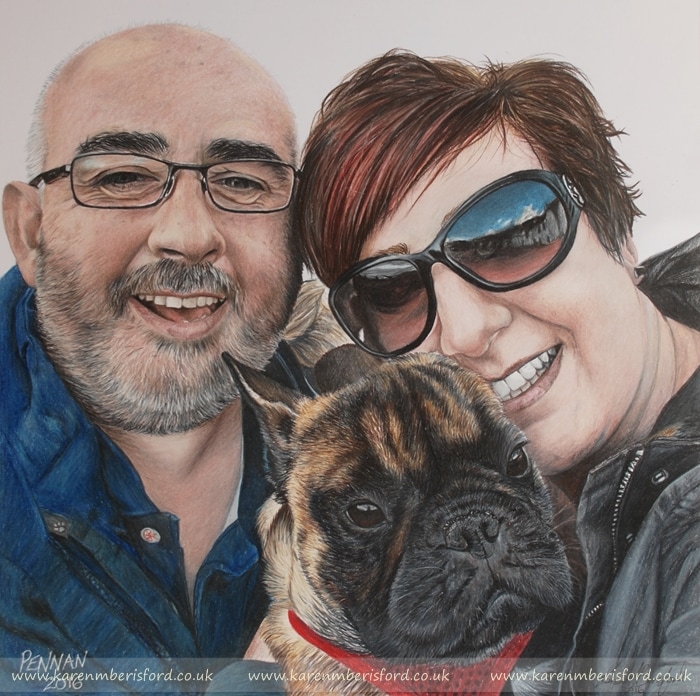
Whilst in confinement, I plan to complete a 'few' pieces of art that have been hanging around the studio for a while. Over the weekend, I worked on a painting of myself with our old Labrador/Collie cross called Cindy. I am using the Ampersand Pastelbord which allows me to create smooth layers due to its texture. You can find more of my acrylic paintings in my online art gallery
Bespoke commissions are available to book. Last year (2017), I started receiving Christmas orders as early as September, which kept me busy throughout the season. From mid-October onwards, I worked 10-12 hours a day, creating a schedule list for each day to ensure that all the portraits were completed on time. Some orders were from overseas, and I had to make sure that any frames ordered were received well in advance as framers tend to be very busy during the festive season. My goal was to finish all the orders a week before I travelled to my hometown of Chesterfield, but I worked late into the night before my journey. Fortunately, everything went smoothly, and the person who commissioned it met me at the train station in Chesterfield to collect the portrait of Star the Chow Chow. The painting had travelled with me for six hours on a bus, coach, and train inside my suitcase. The lady who commissioned the painting gave me a lovely bunch of flowers. I was delighted to see the recipients' positive comments on Christmas day after receiving their beloved pets' portrait. Click on any of the images to visit the progress pages. I've completed all the Christmas commissions and took a well-deserved break to recharge. Now, I'm back in the studio, creating new articles and planning exciting art workshops for 2018 on my Step by Step Art website. There are numerous tasks to accomplish behind the scenes. If you're interested in booking a personalized commission or are an artist searching for helpful articles, mini-tutorials, and a chance to attend a 1-day art workshop with me, click on the links below to visit my website. Here's hoping 2018 is a wonderful year for you! Karen This christmas, I was extremely busy with commissions. I had five to complete in the space of 6 weeks, which was a real challenge. Normally, one portrait can take 3 - 5 weeks each, so it was a very busy time. All were completed and delivered out to customers in ample time, and I have included all the commission details and final portraits below, alongside customer testimonials.
"I'm sitting looking at Buddy in pride of place on the wall, photo attached! It is absolutely lovely and it had the desired effect on Steve when he unwrapped - there were tears!! Everyone that has seen it has said how amazing it is with the amount of fine detail and so Buddy. If I manage to get a decent photo of Buddy next to it I will send it on! Thank you once again, it is lovely to have a painting of Buddy forever."
"Just wanted to let you know that mum loves her portrait and we all cried our eyes out when we first saw it. What you've done is so special and we couldn't have asked for a better painting to remember him by. It captures his brilliant personality so well. I'll definitely be recommending you to my spaniel loving friends!
"Hi Karen, I just wanted you to know that I absolutely love my painting of Kita. Thank you so much, you have done the most amazing portrait of him. He was my best friend and my little boy and the painting has been hung in the living room so we can all admire him everyday! Thank you again xx"
"Hi Karen , Hope you had a lovely Christmas. Wanted to drop you a note to say that Max absolutely loved the portrait! She couldn't believe how well you'd captured the detail from the photo and was thrilled to pieces! We've already recommended you to friends and family and am sure we'll use your amazing skills again in the the future. Have a great New Year!! Diarmid"
"Thank you so much for my beautiful portrait, you've really excelled yourself this time, its amazing!"
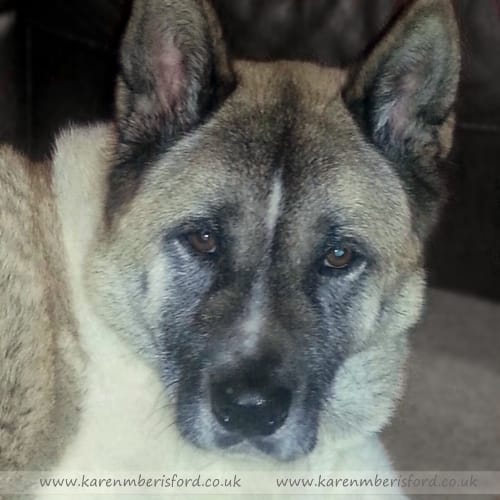
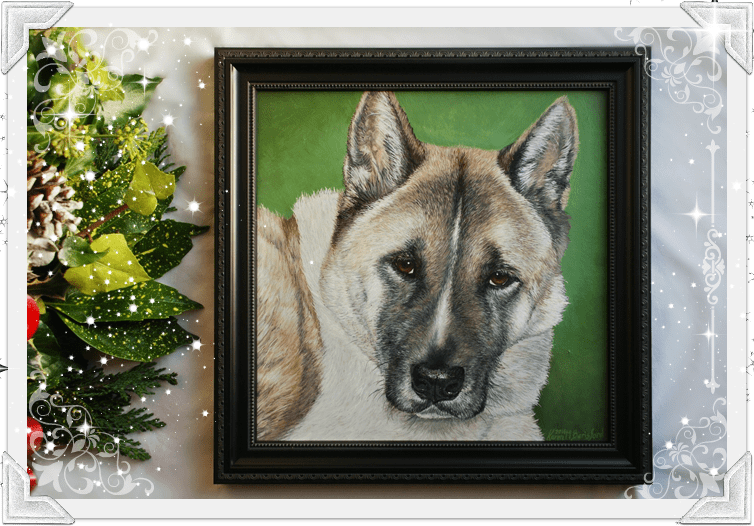
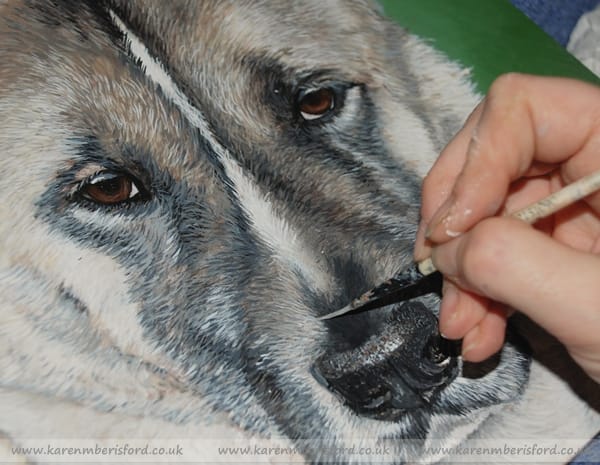
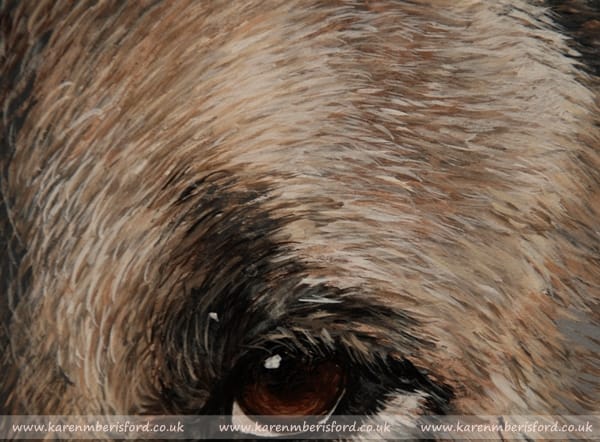
This year has been an extremely busy Christmas for Commissions and I suspect I ended up biting off more than I could chew, finally finishing the last commission of the year today and feeling emotionally shattered after early mornings and late nights creating some beautiful doggies and very special portraits for some lovely people. This is one of the Christmas commissions that I can show as it was given to the recipient early so Kita's Mum could choose the frame of the memorial portrait of her precious boy. Having created so many Pet portraits over the years I was able to work far more into the painting than was seen in the photograph as Kita's owners sadly had few photos of him and as Acrylic portraits offer extremely fine detail, every single hair had to be applied individually using a very thin brush to give the fine detail.
Upon completion of the portrait I then applied 2 layers of satin varnish which was then framed in the 'Brockwell' moulding, packaged up and sent to his new home. Upon receipt Kita's mum sent me the following text: "I just wanted you to know that I absolutely love my painting of Kita. You have done the most amazing portrait of him, he was my best friend and my little boy. I love him so much and the painting of him has been put up in the living room so we can all admire him everyday!!! It is always special recieving such feedback and I am looking forward to hearing how my other portraits have gone down this Christmas, hoping I am able to bring a smile to the recipient's face and knowing I did a good job for them all. I will share each portrait on my blog once I've had a decent break and would like to offer this opportunity to wish you all a Merry Christmas & A Happy New Year!!
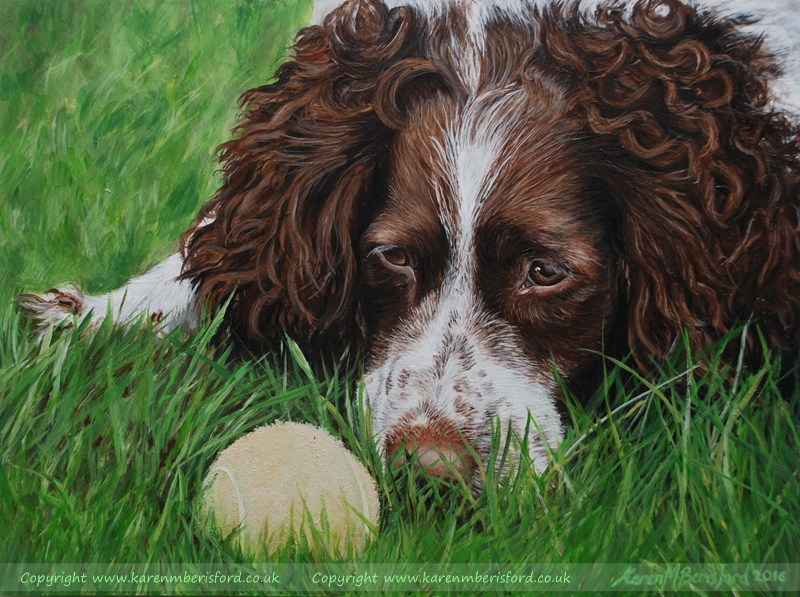
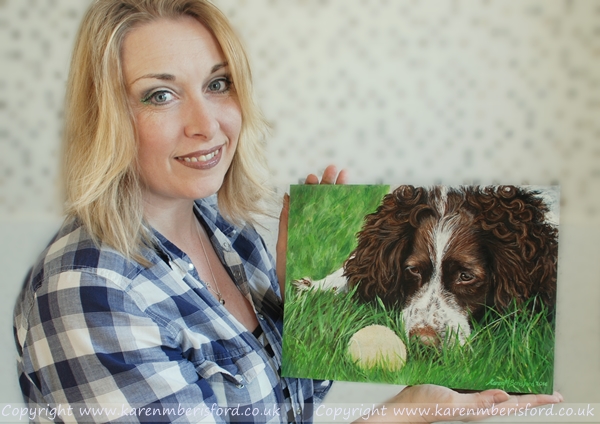
I recently completed this stunning portrait of Willow the Springer Spaniel, as a surprise portrait from a husband to his wife, for their special 1st wedding anniversary. The reference photograph was a brilliant composition to begin with, and I knew the painting would be great fun to do.
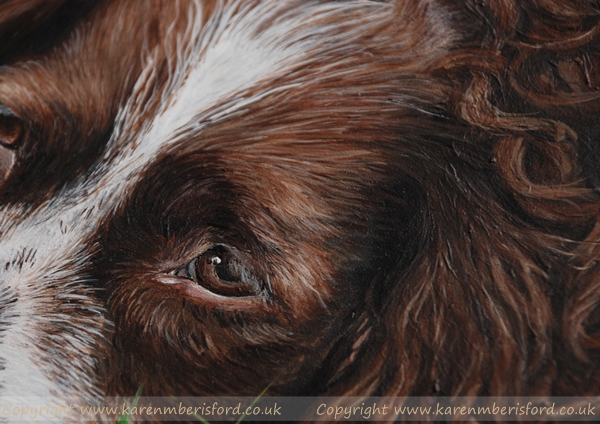
My acrylic paintings are created to offer vibrancy and wherever possible, texture and as the ball was at the forefront of the painting I mixed a moulding paste in with the paints to give the fluffy texture of a tennis ball. I also added texture into Willow's fur using the moulding paste too to add interest when viewing the painting at different angles.
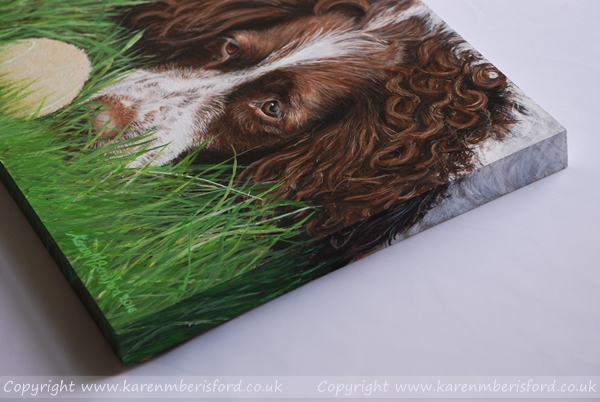
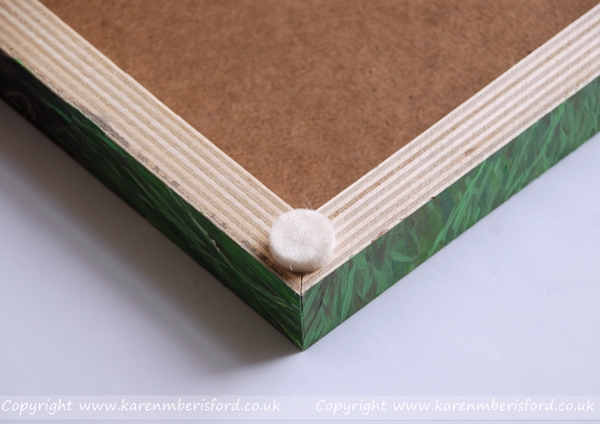
This portrait was created on a 22mm Gessobord so that it could be hung without a frame and the edges were also painted too. The painting was sealed with a few layers of Satin Varnish and 2 wall protector feet were added to the bottom corners on the back of the painting for added protection. The great thing about these 22mm board portraits are that you can choose at a later date to have a frame added if you prefer or keep them unframed for that contemporary feel. I really enjoyed creating this portrait and was pleased to hear Willow's Mum was pretty happy with her surprise when she received it too! Karen, I was the lucky one to receive this beautiful painting. I can't tell you what a lovely gift it is, thank you so much for capturing Willow's character so well. I absolutely love it, it's beautiful and one to be treasured for many years to come. Bailey - 10" x 12" Coloured pencil pet portraitBailey is the second portrait completed in Coloured pencils for his Mum after heartbreakingly losing both Bailey and Casey (the first portrait) in close succession of each other and was gifted both portraits by a good friend. Bailey was originally sat on a green stripey rug but I thought it would suit the portraits if they were both sat on the same wooden
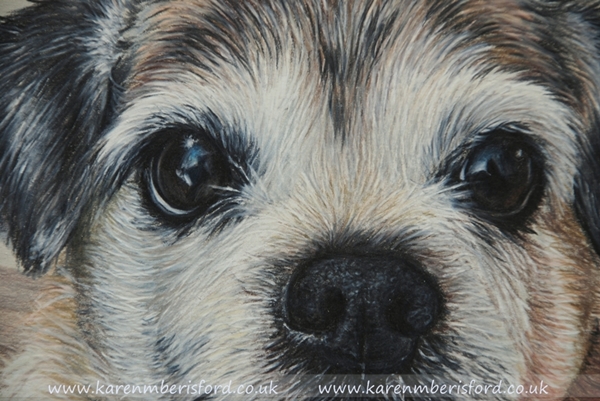
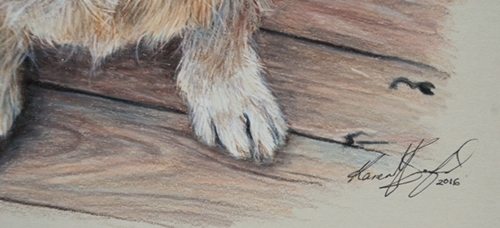
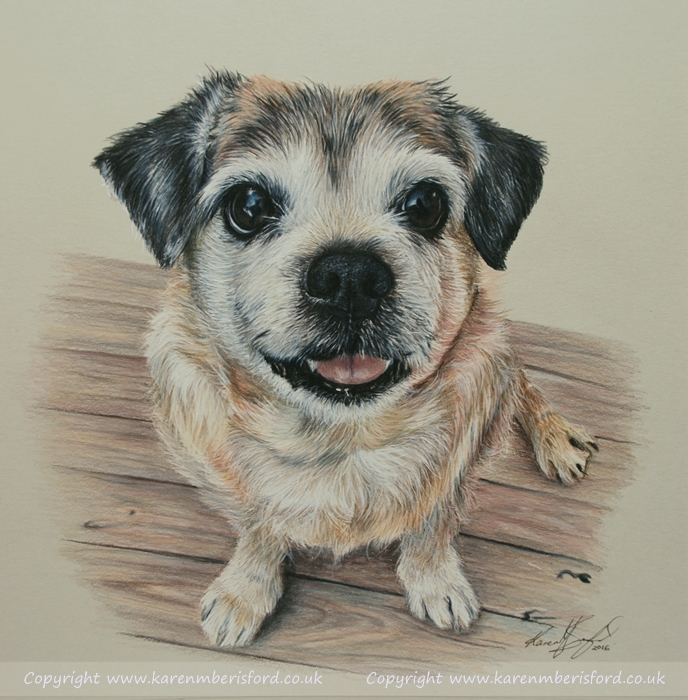
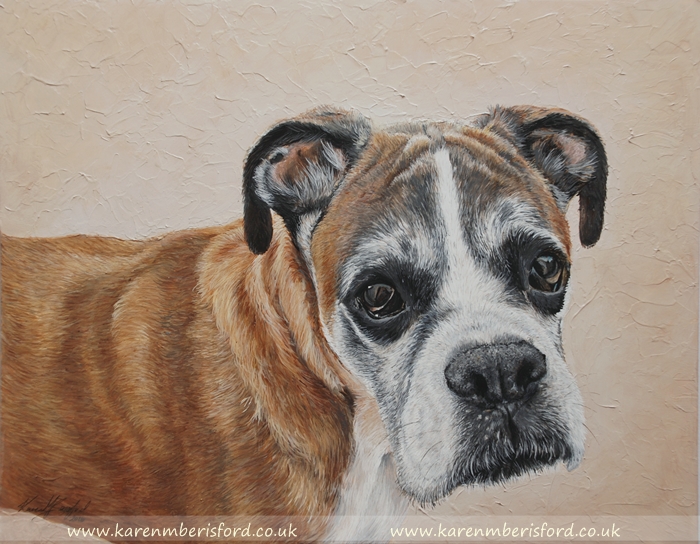
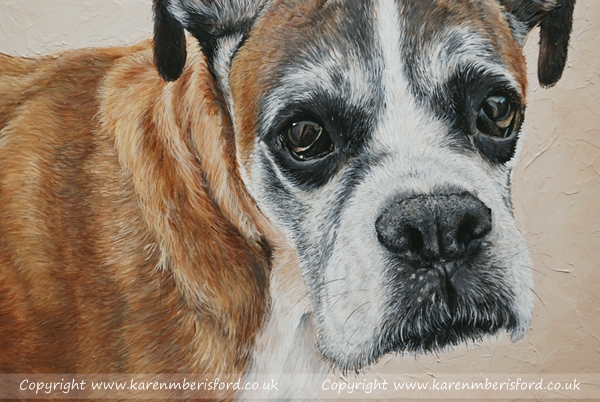
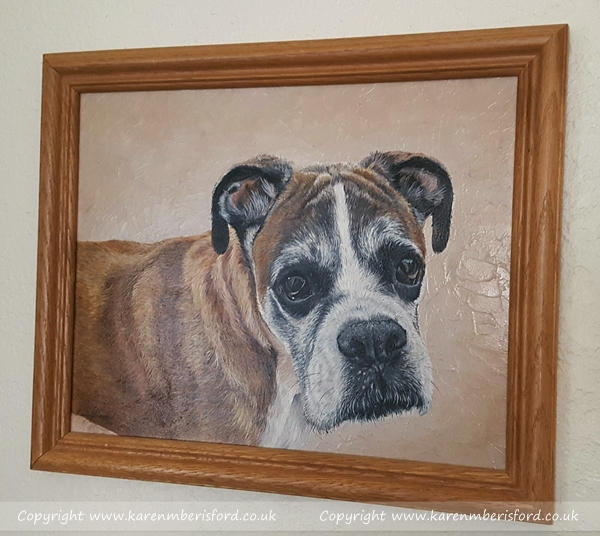
This portrait depicts Bailey, a Jack Russell/Pug mix, rendered in coloured pencils for a repeat customer. The initial drawing I created for them featured their beloved Jack Russell, Casey, who had sadly passed away. Tragically, a few months later, Bailey also passed, following his companion. The portrait of Bailey has been modified to include the floorboards featured in Casey's portrait, ensuring visual continuity and balance. Originally, Bailey was seated on a green striped rug, but changes can be readily made upon customer request. To view Bailey's portrait and the other pencil drawings created for this client, please click the link below. " Bailey just arrived! Well, about 15 minutes of tape removal ago. We are so chuffed! Bailey was loved by all of us, but loves my husband best, he was over the moon! We are blessed by your talent! Obe - 11" x 14" Boxer Dog Acrylic paintingI was asked to create an acrylic painting of a Boxer dog called Obie, as a surprise gift from friends online to a lady in the USA. The reference photo was a beautiful pose and of great quality, so I was able to gather lots of detail to be able to create this special memorial painting of him.
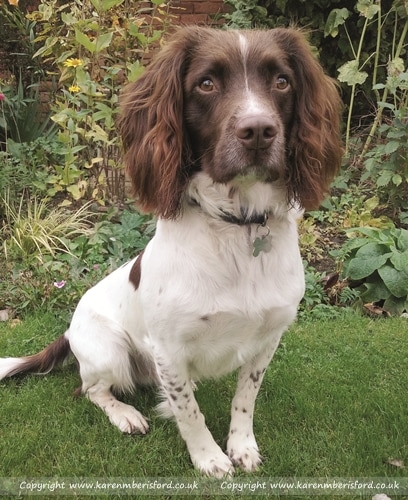
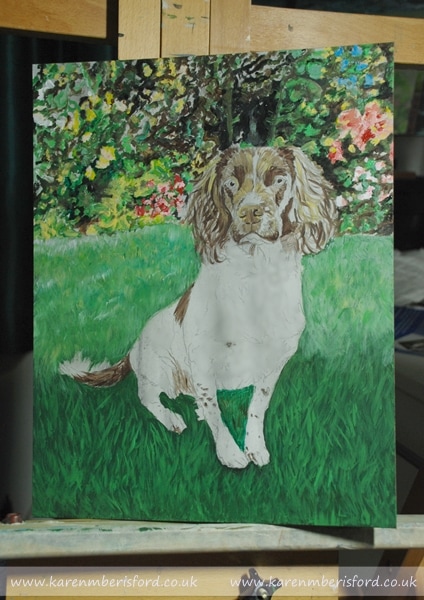
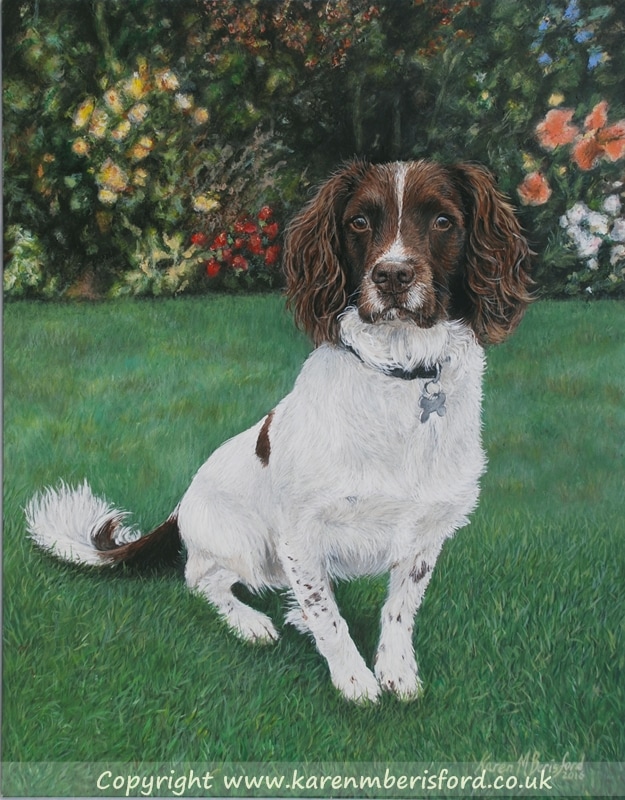
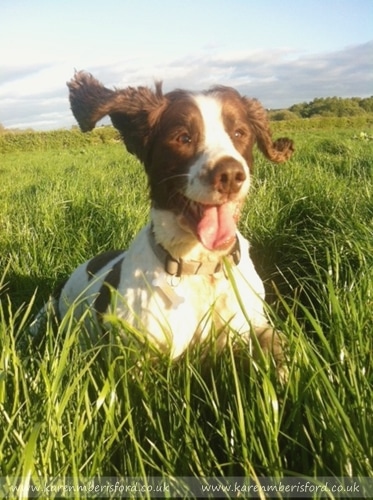
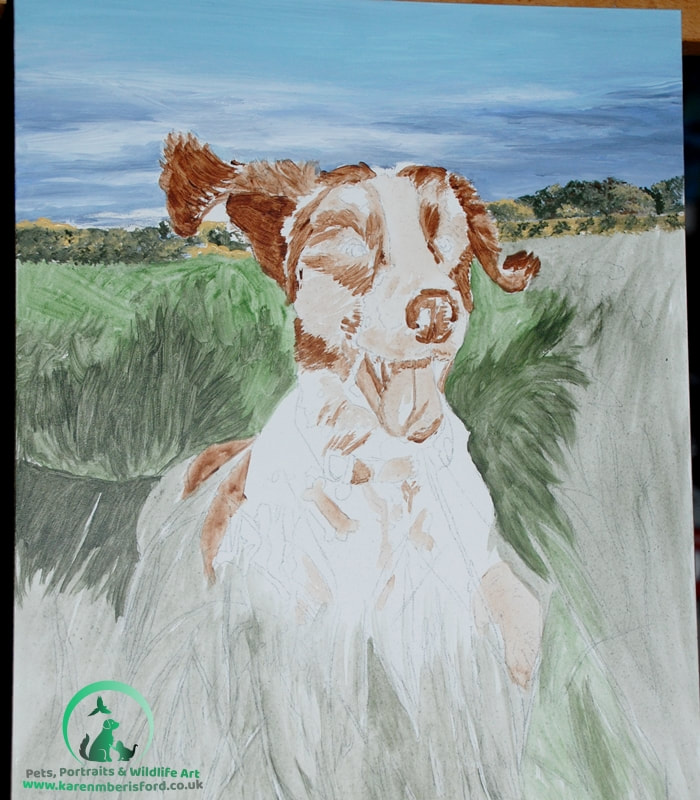
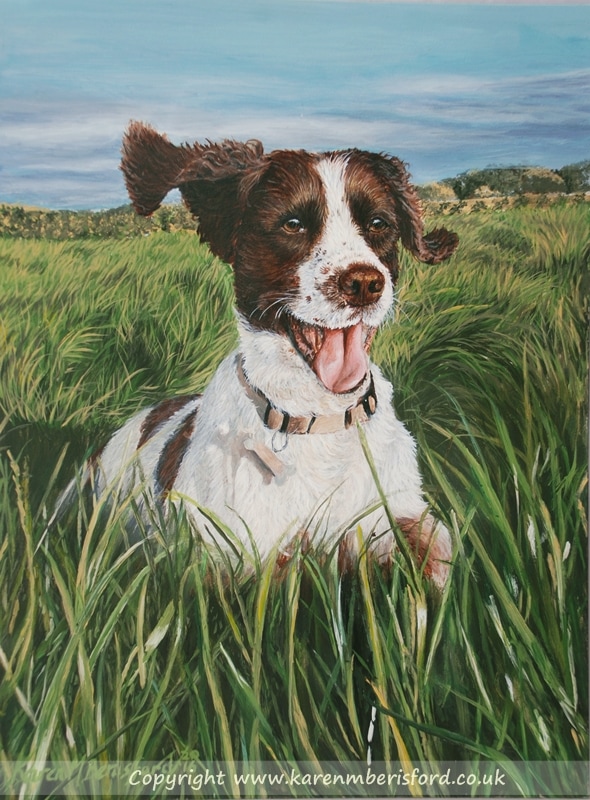
My acrylic paintings are created using a mixture of vibrant colour and sometimes I will include a medium or two, which provides texture. The background texture was created with moulding paste and applied with a palette knife. Nearly 40 Facebook friends clubbed together to book this surprise portrait, and it was lovely to hear how happy the recipient was upon receiving such a thoughtful gift from great friends! 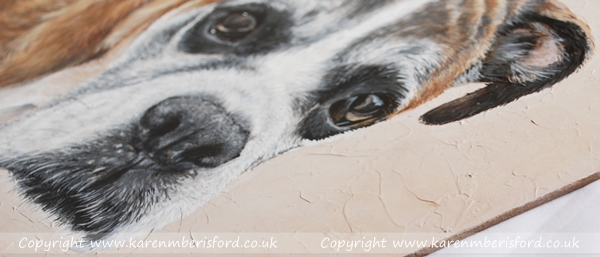 The creation process of my acrylic pet paintingsI'd like to share the process involved in creating my acrylic paintings. Even when I have several dog portraits on the easel, my method remains consistent, however, I may choose to enhance the artwork by incorporating different mediums or adding specialist colours. Here are two of my latest dog portraits: one features a Springer Spaniel swimming, and the other, a young female white Boxer. Springer Spaniel |
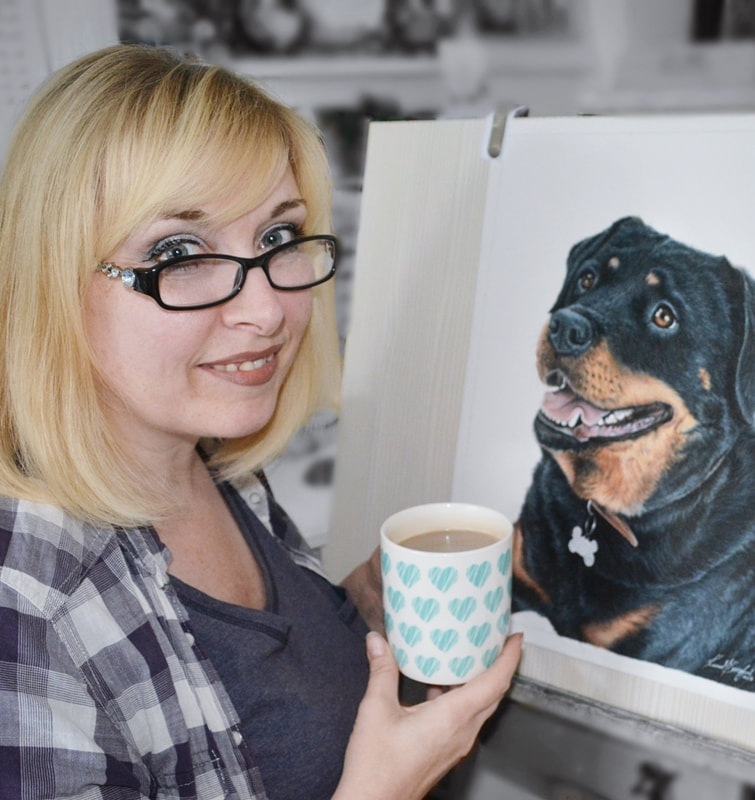
AuthorKaren M Berisford Select tags below to search the news blog directory.


Review us on FreeIndex
Categories
All
Archives
July 2024
|


|
Vertical Divider
|
- Art Store
Original Art & Prints - Custom made Portraits - Gift Vouchers - The Art Hub (For Artists) 
My Etsy Store
Vertical Divider
|
- Art Gallery
- Pet Portraits Gallery - Acrylic Paintings - Oil Pastel Paintings - Framing Info. - Coloured Pencil Portraits Videos from the Studio - Art in Progress Vertical Divider
|
|
Images and text within this website are Copyright of Karen M Berisford 2010 - 2024
No content should be used, copied or distributed in any way without express consent from Karen M Berisford
No content should be used, copied or distributed in any way without express consent from Karen M Berisford